New Doors · Toronto
Commercial Sectional Door Repair
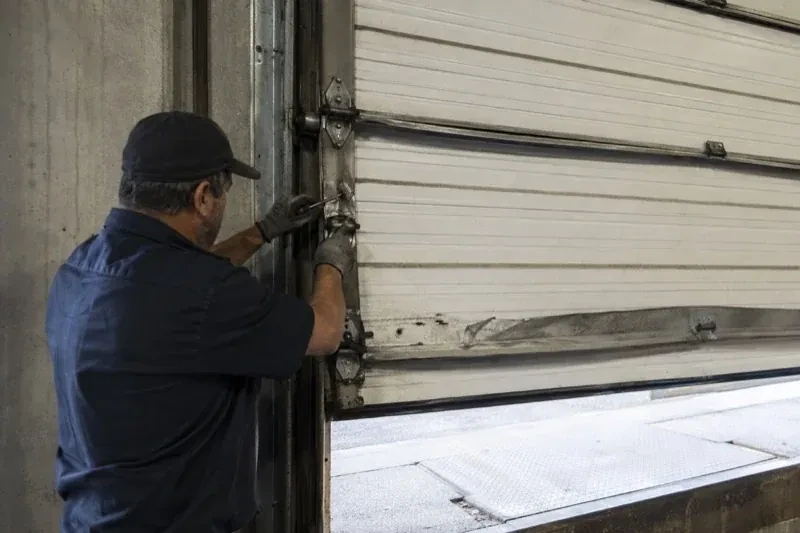
The loading-bay door rises with one side several centimetres lower than the other. A lift cable looks slack, the bottom section sits crooked, and staff have stopped using the opening until the door can travel level again.
Commercial Sectional Door Repair
In plain words
High-lift and vertical-lift doors need repair methods suited to their track geometry. Cable tension, drum selection, shaft condition, track support and the transition from vertical travel all affect whether the sections remain controlled. The technician records the configuration before disassembly, supports the door at a stable position and matches replacement components to the door weight and lift arrangement. After reassembly, level travel and cable seating are observed at several positions rather than judged only with the door closed.
How the visit goesThe operator runs and the drive chain moves, yet the sectional door hesitates near the floor. It feels unusually heavy during manual operation, pointing to a counterbalance problem rather than a simple control-station fault.
Toronto
How the visit goes
Reading an uneven door
A crooked bottom edge leads to a side-by-side comparison. Cable condition and length, drum grooves, shaft position, bearing movement and bottom fixtures are viewed together. The technician notes whether one cable is slack, crossed or frayed and whether a roller has left its normal track position. Measurements at the tracks show if the guides remain parallel and plumb. The door is then secured so its weight cannot deepen the imbalance during inspection. These findings reveal whether the repair belongs in the lifting system, track alignment or impact-damaged hardware.
Replacing an impact-damaged section
The affected section is supported while hinges, rollers and connected hardware are transferred or renewed. The replacement is matched for thickness, construction, profile and required reinforcement so it fits the neighbouring sections and carries the same hardware pattern. Bent end stiles or struts are addressed as part of the section assembly. Rollers are returned to the correct hinge positions, section joints are aligned and fasteners are set securely. Track clearance is then checked through the curve so the new panel travels without rubbing or opening gaps.
Useful documentation for a busy facility
The finished record ties the complaint to the actual repair: door identification, parts changed, settings adjusted and functions tested. For properties with many similar openings, assigning a clear asset number to each door prevents service histories from becoming mixed. Cycle demand, collisions and recurring observations can then be logged against the correct bay. This information supports practical maintenance planning and helps the next technician arrive with relevant dimensions and system details, while staff retain a concise reference for normal sound, travel and control behaviour.
Commercial Sectional Door Repair
In the van
- Shafts and bearings
- Commercial rollers
- Lift cables and drums
- Numbered end hinges
- Bottom seal and retainer
What affects the quote
Same fees day, night or weekend
1Counterbalance components involved
Spring count, shaft arrangement, drum type, cable dimensions, bearings and bottom fixtures determine which tensioned parts must be controlled, replaced and reset together.
2Access to overhead hardware
Ceiling height, loading equipment, storage, piping and the location of shafts or high-lift track influence the access equipment and work-zone setup required.
3Documentation or rated-assembly needs
Door labels, fire-safety records, site procedures and required test documentation can add coordination and component-verification steps to work on a regulated closure.
Commercial Sectional Door Repair: questions
What can staff prepare before the repair visit?
Clear vehicles, pallets and stored materials from both sides of the opening and arrange another traffic route. Have the door number, model information, control location and service record available if possible. Note where in the cycle the symptom occurs and whether there was an impact or recent change. Access to the electrical isolation point may also be needed.
What happens during the final operational test?
The technician observes the door through the complete travel path, checking that sections articulate cleanly, rollers stay guided, cables track on their drums and the bottom edge remains level. Balance is evaluated where manual testing is appropriate. Powered controls, stopping positions and installed photoelectric sensors or sensing edges are then checked, followed by a review for vibration or contact.
How often should commercial door hardware be inspected?
The appropriate interval follows the door and operator manuals, operating cycles, environment and facility maintenance plan. A heavily used exterior bay may need attention more often than a lightly used interior opening. Staff can still observe cables, seals, sensors, sound and travel during normal operation, while tensioned components and adjustments remain part of a technician's planned inspection.
Installation & Upgrades
- Insulated Steel Garage Door InstallationYou want windows for natural light without turning the garage into a cold glass wall.
- Wind-Rated Garage Door ReplacementThe current double door shudders when pressure changes outside, and daylight appears briefly along…
- Carriage-House Garage Door InstallationYou appreciate the grain and depth of traditional wood doors, though regular refinishing is not…
Commercial Sectional Door Repair near you
Residential and commercial customers in Toronto come to us for spring and cable replacement, off-track resets, opener diagnosis and replacement, remote and keypad programming, weatherstrip and seal work, balance adjustments, panel repair and new door installation. Each service is explained on its own page in plain language.